About the Exam

This exam validates intermediate knowledge of HPE Aruba Networking campus access solutions for professionals who implement and operate enterprise wired and wireless networks. It covers topics such as wired infrastructure, routing and switching, virtual switching, gateways, WLAN and LAN edge security, and campus solution management. Passing demonstrates the candidate can apply the knowledge and skills needed for HPE Aruba Networking Campus Access deployments.

Exam Topics

  • Network Stack4%
  • Connectivity8%
  • Network Resiliency and device virtualization8%
  • Switching14%
  • WLAN17%
  • Routing13%
  • Security9%
  • Authentication/Authorization8%
  • Managing and Monitoring6%
  • Troubleshooting6%
  • Performance Optimization7%

How to Use This Practice Exam

  1. Browse — Read each question, select your answer, and reveal the explanation.
  2. Exam Mode — Simulate real exam conditions with a timed session and score report.
  3. Learn Mode — Spaced repetition schedules questions you struggle with for long-term retention.

Download the Full Exam PDF

Get every question and answer in a clean, printable PDF built for offline study. Purchase once, keep permanent access, and re-download the latest version anytime.

Last updated September 11, 2026 at 4:40 AM

Topic filter
Question status
Question sort
Questions per page

QuestionQ1

VerifiedSwitching

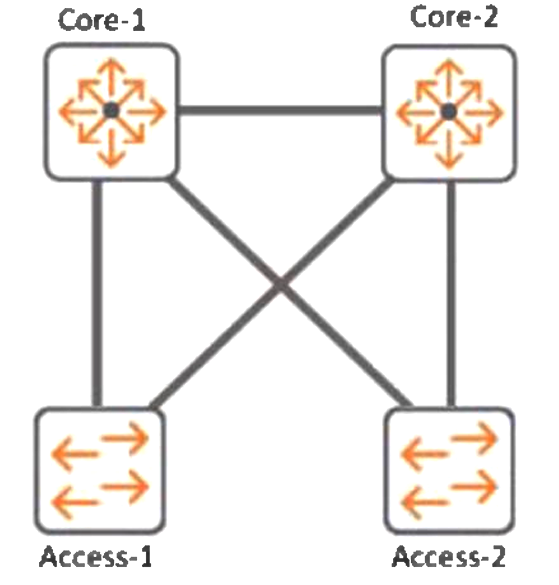
Refer to the exhibit.
Question Image

For Access-1, which MSTP setting must be configured identically to load-balance VLANs?

Explanation

MSTP achieves VLAN load balancing by mapping VLANs to different MST instances, each of which can select a different active topology. Switches in the same MST region must have the same VLAN-to-instance mapping for those instances to operate consistently.

Learn more

Community Discussion

No comments yet. Be the first to start the discussion!

QuestionQ2

VerifiedAuthentication/Authorization

Which network components use the RADIUS protocol to communicate for authentication and accounting?

Explanation

RADIUS carries authentication and accounting exchanges between a Network Access Server (NAS), acting as the RADIUS client, and a RADIUS authentication server. Endpoints do not normally exchange RADIUS messages directly with the server.

Community Discussion

No comments yet. Be the first to start the discussion!

QuestionQ3

VerifiedWLAN

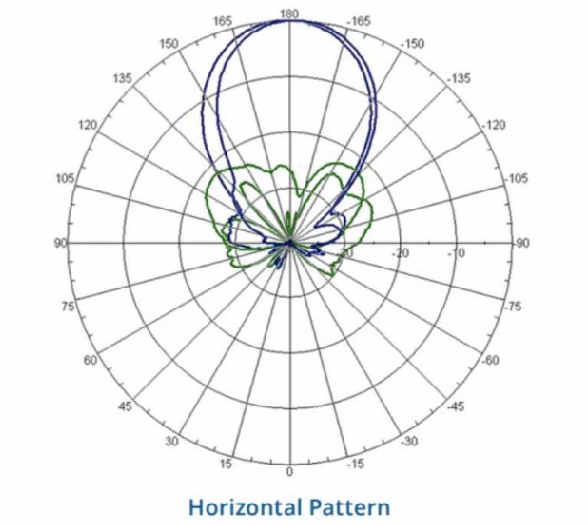
Refer to the image.

Question Image

A customer reports weak Wi-Fi coverage in their office and notes that the office across the hall has a much better signal. What is the most likely cause of this issue?

Explanation

A directional antenna concentrates RF energy into a defined beam rather than providing uniform coverage around the access point. Locations outside that primary beam can have weak Wi-Fi signal even when nearby locations receive a strong signal.

Community Discussion

No comments yet. Be the first to start the discussion!

QuestionQ4

VerifiedSecurity

Match the ESP component in an AOS-10 tunneled-mode deployment between an AP and a Gateway with the listed security terminology. Options may be used more than once or not at all.

Drag & Drop
Access Point
Access Point and Gateway
Device Designated Gateway
Overlay Tunnel Orchestrator
Explanation

An access point is the 802.1X authenticator for its associated client. In tunnel forwarding, the AP forwards RADIUS access requests to its assigned Device Designated Gateway, which provides the RADIUS-proxy function. The Overlay Tunnel Orchestrator performs the Phase 1 tunnel-orchestration function, while the access point and gateway establish the Phase 2 IPsec security association. Aruba’s current tunnel-orchestrator documentation confirms that tunnel setup and IPsec key/SPI generation are centralized in the orchestrator, and its tunnel-forwarding documentation confirms AP-to-DDG RADIUS forwarding.

Learn more

Community Discussion

No comments yet. Be the first to start the discussion!

QuestionQ5

VerifiedSecurity

Your Director of Security asks you to assign AOS-CX switch management roles to new employees according to their specific job requirements. After configuration was completed, it was observed that a user assigned the administrator’s role did not have the proper level of access on the switch.

The user should have been limited to viewing nonsensitive configuration information, and a level of 1 should have been assigned to their role. Which default management role should have been assigned to the user?

Explanation

The default operators role has privilege level 1 and provides basic display-only access, including viewing nonsensitive switch configuration information. The administrator role has privilege level 15 and permits far broader management access.

Learn more

Community Discussion

No comments yet. Be the first to start the discussion!
Know a question that should be here? Contribute to this exam
Back home