About the Exam

GCED validates skills in defensive network infrastructure, packet analysis, penetration testing, incident handling, and malware removal, building on GSEC-level security knowledge. It is aimed at incident responders, penetration testers, SOC engineers and analysts, network security professionals, and others who need technical depth in comprehensive security solutions. Passing the proctored 3-hour, 115-question exam with a minimum score of 69% demonstrates advanced technical ability to defend enterprise environments and protect an organization as a whole.

Exam Topics

  • Defending Network Protocols9%
  • Defensive Infrastructure and Tactics9%
  • Digital Forensics Concepts and Application9%
  • Incident Response Concepts and Application9%
  • Interactive and Manual Malware Analyses9%
  • Intrusion Detection and Packet Analysis9%
  • Malware Analysis Concepts and Basic Analysis Techniques9%
  • Network Forensics, Logging, and Event Management9%
  • Network Security Monitoring Concepts and Application9%
  • Penetration Testing Application9%
  • Penetration Testing Concepts9%

How to Use This Practice Exam

  1. Browse — Read each question, select your answer, and reveal the explanation.
  2. Exam Mode — Simulate real exam conditions with a timed session and score report.
  3. Learn Mode — Spaced repetition schedules questions you struggle with for long-term retention.

Download the Full Exam PDF

Get every question and answer in a clean, printable PDF built for offline study. Purchase once, keep permanent access, and re-download the latest version anytime.

Last updated December 3, 2025 at 2:49 PM

Topic filter
Retired questions
Question sort

QuestionQ1

Digital Forensics Concepts and Application

You have been asked to search for Alternate Data Streams on the following Windows partitions: 2GB FAT16, 6GB FAT32, and 4GB NTFS. How many total gigabytes and partitions do you need to search?

  • A 4GBs of data, the NTFS partition only.
  • B 12GBs of data, the FAT16, FAT32, and NTFS partitions.
  • C 6GBs of data, the FAT32 partition only.
  • D 10GBs of data, both the FAT32 and NTFS partitions.
Explanation

Alternate Data Streams are supported by NTFS. Therefore, only the 4GB NTFS partition must be searched; the FAT16 and FAT32 partitions do not need an Alternate Data Stream search.

Learn more

Community Discussion

No comments yet. Be the first to start the discussion!

QuestionQ2

Defensive Infrastructure and Tactics

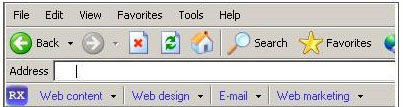
Which tool is best suited to remove the unwanted add-on shown below?
Question Image

  • A ProcessExplorer
  • B Taskkill
  • C Paros
  • D Hijack This
Explanation

HijackThis is designed to identify and remove unwanted browser toolbars, Browser Helper Objects, and related Internet Explorer configuration entries.

Community Discussion

No comments yet. Be the first to start the discussion!

QuestionQ3

Digital Forensics Concepts and Application

At the beginning of an investigation on a Windows system, the lead handler runs the following command after inserting a USB drive. What is this command intended to do?

C:\ >dir / s / a dhsra d: \ > a: \ IRCD.txt

  • A To create a file on the USB drive that contains a listing of the C: drive
  • B To show hidden and archived files on the C: drive and copy them to the USB drive
  • C To copy a forensic image of the local C: drive onto the USB drive
  • D To compare a list of known good hashes on the USB drive to files on the local C: drive
Explanation

dir creates a directory listing, /s traverses subdirectories, and /a can include files and directories with the specified attributes. The > redirection operator writes that listing to IRCD.txt on the USB drive; it does not copy the listed files, acquire a forensic image, or compare hashes. Microsoft documents that dir displays directory contents and that its output can be redirected to a file.

Learn more

Community Discussion

No comments yet. Be the first to start the discussion!

QuestionQ4

Intrusion Detection and Packet Analysis

An analyst will capture traffic from an air-gapped network that does not use DNS. The analyst needs to identify unencrypted Syslog data in transit. Which of the following is the most efficient for this purpose?

  • A tcpdump –s0 –i eth0 port 514
  • B tcpdump –nnvvX –i eth0 port 6514
  • C tcpdump –nX –i eth0 port 514
  • D tcpdump –vv –i eth0 port 6514
Explanation

UDP port 514 is the standard Syslog transport port, whereas port 6514 is designated for secure Syslog transports. The -n flag avoids DNS and service-name resolution, which is appropriate for an air-gapped network, and -X displays packet payload in hexadecimal and ASCII so plaintext Syslog messages can be inspected. RFC 5426: Transmission of Syslog Messages over UDP

Learn more

Community Discussion

No comments yet. Be the first to start the discussion!

QuestionQ5

Penetration Testing Concepts

Which of the following is most accurately defined as “anything that could potentially target known or existing vulnerabilities in a system?”

  • A Vector
  • B Gateway
  • C Threat
  • D Exploit
Explanation

A threat is any circumstance or event with the potential to cause harm through a system, including the potential for a threat source to exploit a particular information-system vulnerability. An exploit is the mechanism used to take advantage of that vulnerability, rather than the potential danger itself.

Learn more

Community Discussion

No comments yet. Be the first to start the discussion!
Know a question that should be here? Contribute to this exam
Back home