About the Exam

GASF validates a practitioner’s ability to perform forensic examinations on mobile phones and tablets. It covers mobile forensics fundamentals, device file system analysis, mobile application behavior, event artifact analysis, and identification and analysis of mobile device malware. It is aimed at forensic professionals working on mobile device investigations, and passing demonstrates expert-level analysis capability in that area.

Exam Topics

  • Android Device Application Analysis0%
  • Android Device File System Artifacts0%
  • Apple Device Application Analysis0%
  • Apple Device File System Artifacts0%
  • Introduction to Mobile Forensics0%
  • Mobile Device Application Analysis0%
  • Mobile Device File System Artifacts0%
  • Mobile Device Malware Analysis0%

How to Use This Practice Exam

  1. Browse — Read each question, select your answer, and reveal the explanation.
  2. Exam Mode — Simulate real exam conditions with a timed session and score report.
  3. Learn Mode — Spaced repetition schedules questions you struggle with for long-term retention.

Download the Full Exam PDF

Get every question and answer in a clean, printable PDF built for offline study. Purchase once, keep permanent access, and re-download the latest version anytime.

Last updated December 2, 2025 at 3:24 PM

Topic filter
Question status
Question sort
Questions per page

QuestionQ1

VerifiedAndroid Device File System Artifacts

Which artifact must be manually carved when examining a file-system acquisition from an Android device?

Explanation

Deleted images are no longer present as active filesystem records, so their remaining data must be recovered by manually carving raw or unallocated storage. Contacts, SMS messages, and phone numbers are typically stored in databases that can be parsed from a file-system acquisition.

Community Discussion

No comments yet. Be the first to start the discussion!

QuestionQ2

VerifiedMobile Device File System Artifacts

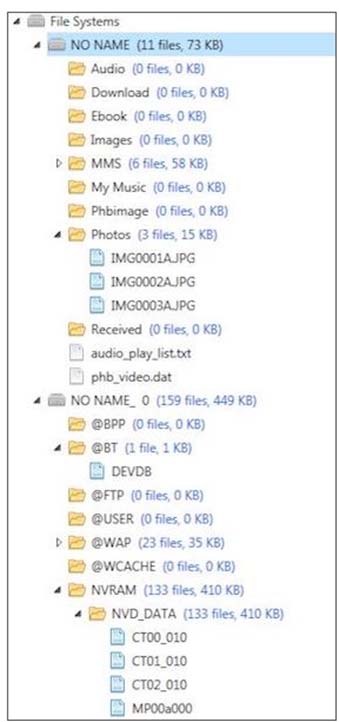
Based on the image shown below, which filesystem is being examined?
Question Image

Explanation

A MediaTek feature-phone filesystem commonly contains NVRAM/NVD_DATA calibration and configuration files along with folders such as @BBP, @BT, and @WAP. This layout is characteristic of Chinese knock-off mobile devices rather than Windows, Android, or BlackBerry.

Community Discussion

No comments yet. Be the first to start the discussion!

QuestionQ3

VerifiedApple Device Application Analysis

After iMessage was introduced with the iOS 5 firmware release, devices began storing date/timestamps in which of the following formats?

Explanation

Apple’s absolute-time representation stores a time interval in seconds from 00:00:00 UTC on 1 January 2001, which is the Mac epoch.

Learn more

Community Discussion

No comments yet. Be the first to start the discussion!

QuestionQ4

VerifiedAndroid Device File System Artifacts

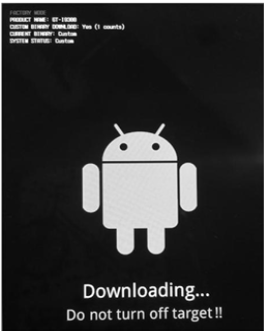
The device shown below is in Download Mode for an attempted physical acquisition. What can be determined by viewing the Android boot screen?
Question Image

Explanation

A “CUSTOM BINARY DOWNLOAD: Yes” indicator shows that a custom, non-factory binary has been installed or flashed on the device at least once; therefore, the original ROM was previously modified.

Community Discussion

No comments yet. Be the first to start the discussion!

QuestionQ5

VerifiedMobile Device Malware Analysis

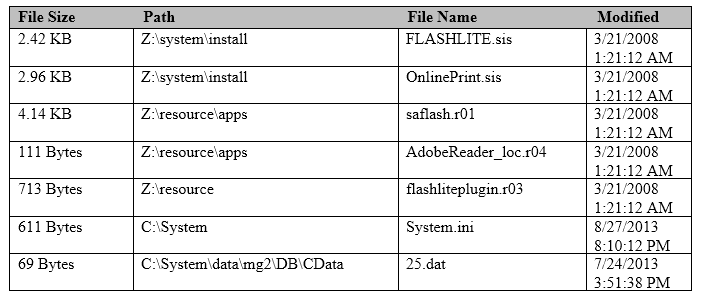
An analyst investigating a Nokia S60 Symbian device needs to determine whether an Adobe Flash file on the handset has been compromised. Which file shown will best target the Adobe Flash files?
Question Image

Explanation

FLASHLITE.sis is the Symbian installation package for Flash Lite, Adobe’s Flash runtime for supported Nokia S60 devices. Its explicit Flash Lite name and .sis package format make it the most relevant file for examining Adobe Flash-related content.

Community Discussion

No comments yet. Be the first to start the discussion!
Know a question that should be here? Contribute to this exam
Back home