Loading provider exams...
Sign Up & unlock 100% of Exam Questions
No Strings Attached!
Updated
warning tmm[<pid>]: 011e0002:4: sweeper_segment_cb_any: Aggressive mode /Common/default-eviction-policy activated (0) (global memory). (345209/690176 pages) warning tmm1[<pid>]: 011e0002:4: sweeper_segment_cb_any: Aggressive mode /Common/default-eviction-policy activated (1000000000000) (global memory). (345209/690176 pages) warning tmm[<pid>]: 011e0003:4: Aggressive mode sweeper: /Common/default-eviction-policy (0) (global memory) 1 Connections killed warning tmm1[<pid>]: 011e0003:4: Aggressive mode sweeper: /Common/default-eviction-policy (1000000000000) (global memory) 2 Connections killed warning tmm[<pid>]: 011e0003:4: Aggressive mode sweeper: /Common/default-eviction-policy (0) (global memory) 1 Connections killed
What is happening when the BIG-IP Administrator sees the messages in the LTM log displayed above? (Choose two.)
This exam has 30 community-verified practice questions. Create a free account to access all questions, comments, and explanations.
Log In / Sign Up
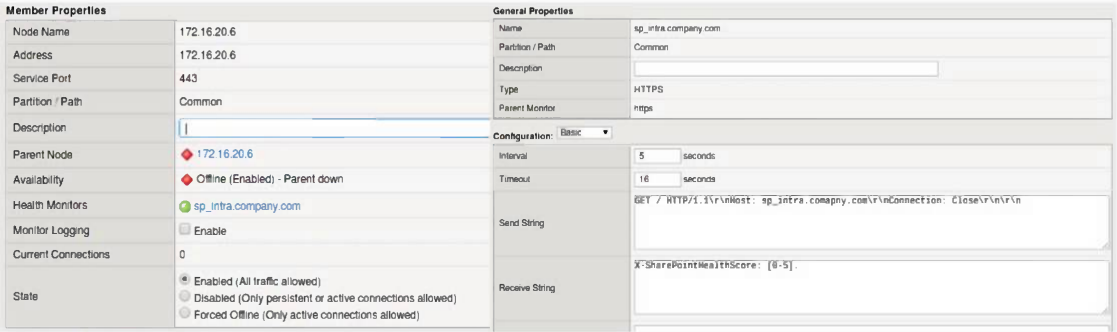
Refer to the exhibit.
A BIG-IP Administrator notices that one of the servers that runs an application is NOT receiving any traffic. The BIG-IP Administrator examines the configuration status of the application and observes the displayed monitor configuration and affected Pool Member status.
What is the possible cause of this issue?
During a maintenance window, an EUD test was executed and the output displayed on the screen. The BIG-IP Administrator did NOT save the screen output. The BIG-IP device is currently handling business critical traffic. The BIG-IP Administrator needs to minimize impact.
What should the BIG-IP Administrator do to provide the EUD results to F5 Support?
What information is required for a BIG-IP Administrator to open an F5 Support ticket?
A BIG-IP Administrator configured a virtual server with a pool of 3 members and selected the Round Robin load balancing method to evenly distribute traffic across the pool members. During initial testing, traffic was not evenly distributed and the pool member 172.16.20.3 received more traffic than the other pool members.
Refer to the exhibit and the virtual server configuration provided below:

ltm virtual http_vs {
destination 10.10.1.100:http
ip-protocol tcp
mask 255.255.255.255
persist {
source_addr {
default yes
}
}
pool http_pool
profiles {
tcp {}
}
serverssl-use-sni disabled
source 0.0.0.0/0
source-address-translation {
type automap
}
translate-address enabled
translate-port enabled
}
What is the most likely cause of this behavior?
A gateway_icmp health monitor is configured on a pool. The BIG-IP Administrator is investigating why the pool is reported as down while the server is active. Other pools with servers in the same subnet are correctly monitored.
What can cause this behavior?
A traffic group includes four devices. The failover method is HA order.
The failover order is:

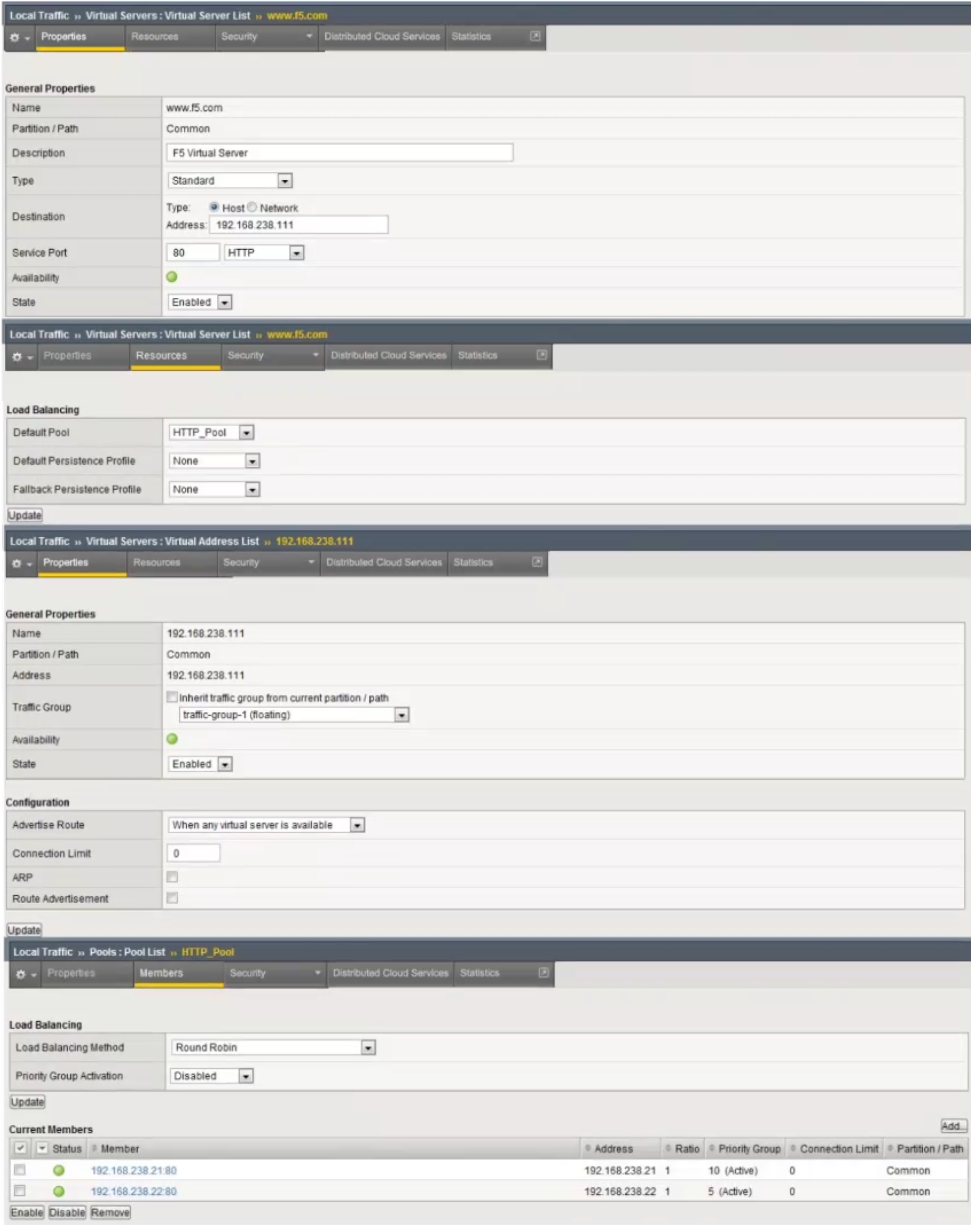
Refer to the exhibit.
How many nodes are represented on the network map shown?
A pool member is exhibiting frequent up-and-down state changes, leading the BIG-IP Administrator to suspect a health monitor issue.
Which specific log file should the BIG-IP Administrator review to diagnose the problem?
During a user reported outage for a single virtual server, a BIG-IP Administrator checks the status of the configured pool associated with the virtual server and sees the status icons for the pool members are black.
What does the black icon indicate?

Refer to the exhibit.
The BIG-IP Administrator has modified an iRule on one device of an HA pair. The BIG-IP Administrator notices there is NO traffic on the BIG-IP device in which they are logged into.
What should the BIG-IP Administrator do to verify if the iRule works correctly?
During a high-demand traffic event, the BIG-IP Administrator needs to limit the number of new connections per second allowed to a Virtual Server.
What should the administrator apply to accomplish this task?