About the Exam

CS0-003 validates skills in detecting and analyzing malicious activity, threat hunting and threat intelligence, vulnerability management, incident response, and reporting and communication. It is aimed at security operations and incident response professionals, with CompTIA listing recommended experience of about four years as an incident response analyst or SOC analyst. Passing demonstrates practical cybersecurity analyst capability across the exam's four domains and the ability to apply tools and methods to real incidents.

Exam Topics

  • Security Operations33%
  • Vulnerability Management30%
  • Incident Response and Management20%
  • Reporting and Communication17%

How to Use This Practice Exam

  1. Browse — Read each question, select your answer, and reveal the explanation.
  2. Exam Mode — Simulate real exam conditions with a timed session and score report.
  3. Learn Mode — Spaced repetition schedules questions you struggle with for long-term retention.

Download the Full Exam PDF

Get every question and answer in a clean, printable PDF built for offline study. Purchase once, keep permanent access, and re-download the latest version anytime.

Last updated July 10, 2026 at 11:48 AM

Topic filter
Retired questions
Question sort
Questions per page

QuestionQ1

Vulnerability Management

A Chief Information Security Officer wants to implement security by design, beginning with a security-scanning method that identifies vulnerabilities, including SQL injection, RFI, XSS, and so on. Which of the following would most likely satisfy this requirement?

Explanation

Dynamic application security testing (DAST) scans a running web application as a black-box target, injecting test payloads and analyzing responses to identify vulnerabilities such as SQL injection and cross-site scripting. It is an appropriate security-scanning method for finding these externally observable web-application flaws.

Learn more

Community Discussion

No comments yet. Be the first to start the discussion!

QuestionQ2

Incident Response and Management

An organization’s security operations center (SOC) team gives confidentiality and integrity priority over monetary considerations. The SOC team contains a rapidly progressing ransomware incident. Which of the following factors motivated the SOC team to take this action?

Choose two
Explanation

Risk appetite establishes which losses an organization considers unacceptable and guides operational risk decisions. The potential impact of a fast-moving ransomware incident on data confidentiality and integrity warrants rapid containment when those objectives are prioritized over monetary considerations.

Learn more

Community Discussion

No comments yet. Be the first to start the discussion!

QuestionQ3

Incident Response and Management

A security analyst is responding to an incident involving a malicious attack on a network data closet. Which option best describes how the analyst should properly document the incident?

Explanation

Photographs preserve the physical condition, arrangement, and connections of affected equipment as evidence before the scene is altered. NIST incident-forensics guidance recommends photographing evidence to retain visual records of computer setups and peripheral devices, alongside detailed evidence-handling documentation.

Learn more

Community Discussion

No comments yet. Be the first to start the discussion!

QuestionQ4

Security Operations

Which of the following represents the central concept behind using an attack methodology framework?

Explanation

Attack methodology frameworks model the tactics, techniques, behaviors, and motivations of adversaries so defenders can assess security from an attacker’s perspective and develop appropriate detections and mitigations.

Learn more

Community Discussion

No comments yet. Be the first to start the discussion!

QuestionQ5

Reporting and Communication

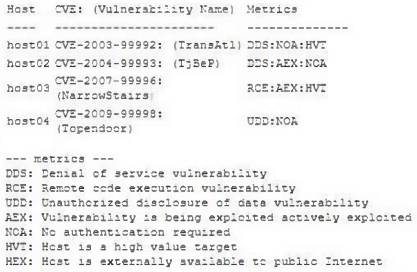
A new cybersecurity analyst must create an executive briefing about potential threats to the organization. Which of the following will generate the data required for the briefing?

Explanation

A risk assessment identifies and evaluates threats, vulnerabilities, likelihood, and business impact, producing the summarized risk information needed for an executive briefing.

Community Discussion

No comments yet. Be the first to start the discussion!
Know a question that should be here? Contribute to this exam
Back home