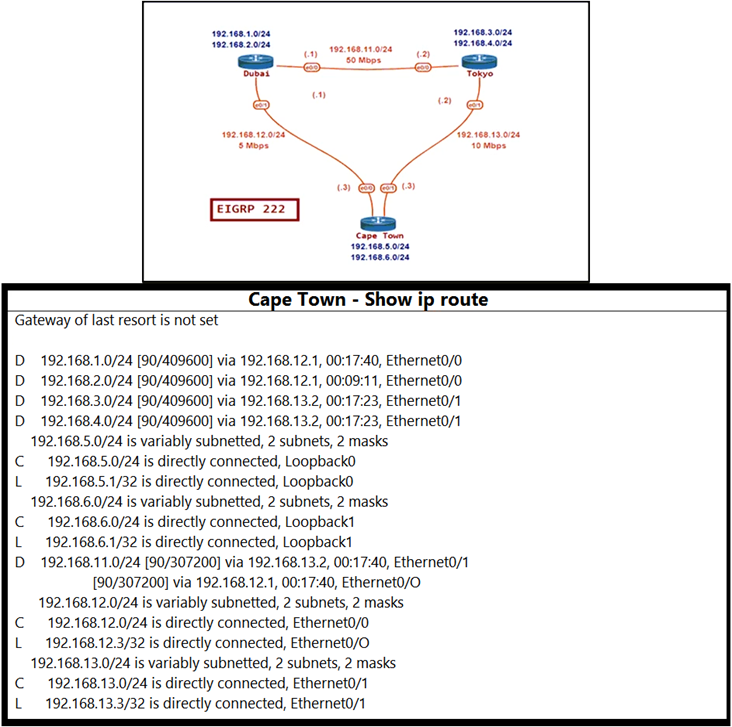
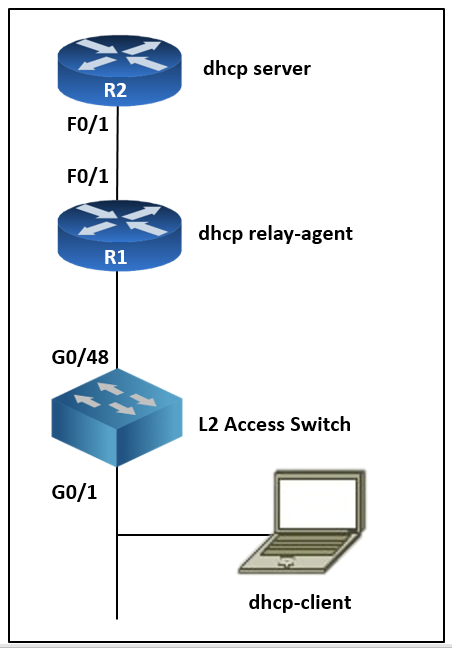
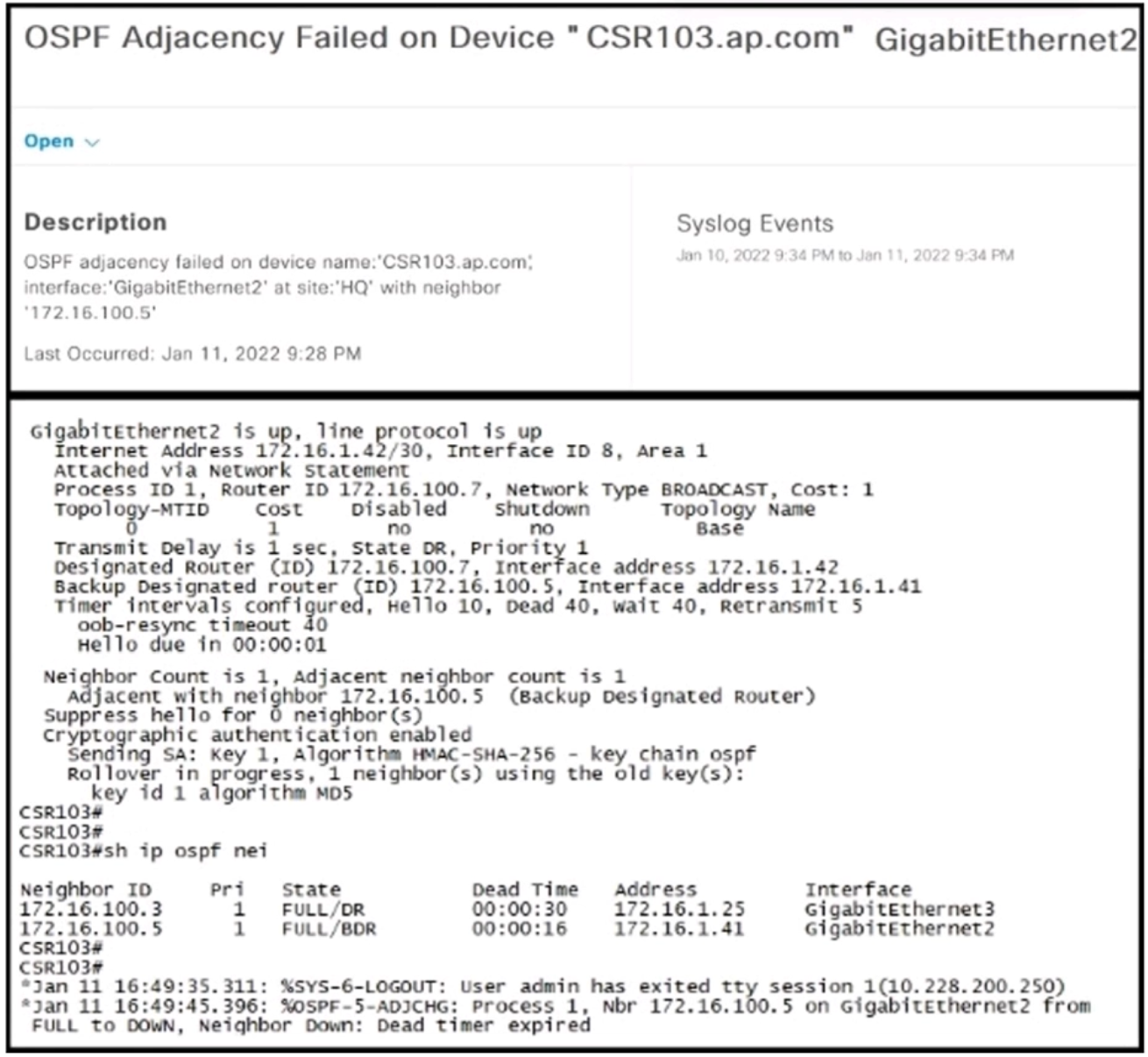
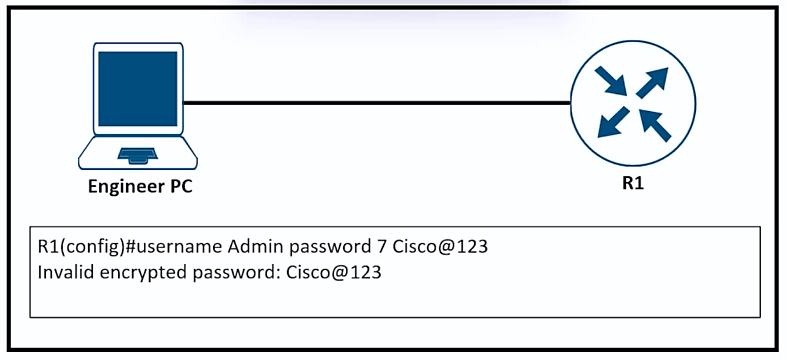
A network engineer troubleshooting a packet drop problem for the host 172.16.100.5 notices that only one link is used and installed on the routing table, which saturates the bandwidth. Which action must the engineer take to resolve the high bandwidth utilization problem and share the traffic toward this host between the two available links?
ADisable the eigrp split horizon loop protection mechanism.
BSet the eigrp variance equal to 3 to install a second route with a metric not larger than 3 times of the best metric.
CChange the EIGRP delay metric to meet the feasibility condition.
DSet the eigrp variance equal to 4 to install a second route with a metric not larger than 4 times of the best metric.
Refer to the exhibit.
Which policy configuration on R1 forwards any traffic that is sourced from the 192.168.130.0/24 network to R2?
A
B
C
D
Refer to the exhibit.
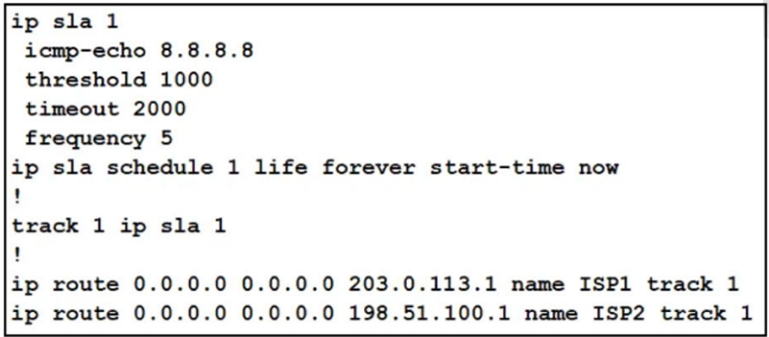
An engineer observes that every time the ICMP packet is lost at a polling interval, track 1 goes down, which causes unnecessary disruption and instability in the network. The engineer does not want the traffic to be rerouted if the loss of ICMP packets is negligible. If the packet loss is persistent for a longer duration, the track must go down and the traffic must be rerouted. Which action resolves the issue?
AChange the IP SLA schedule to run only at certain intervals.
BIncrease the timeout value from 1000 to 1500.
CDefine a delay timer under track 1.
DIncrease the threshold value from 1000 to 1500.
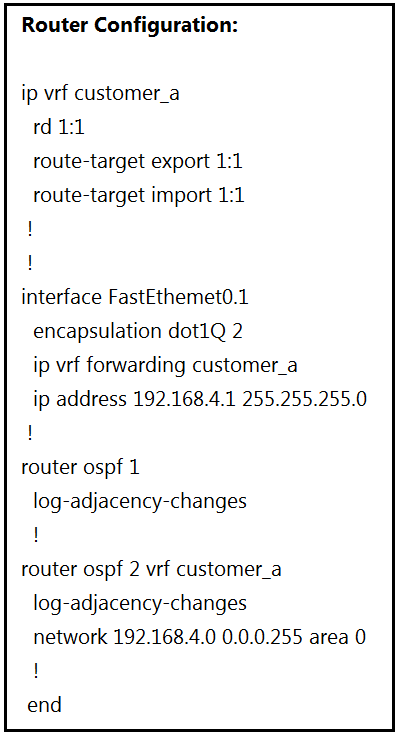
What are two characteristics of a VRF instance? (Choose two.)
AA customer site can be associated to different VRFs.
BEach VRF has a different set of routing and CEF tables.
CIt is defined by the VPN membership of a customer site attached to a P device.
DAll VRFs share customers routing and CEF tables.
EAn interface must be associated to one VRF.
Question 6
Layer 3 Technologies
0
Question 7
Layer 3 Technologies
Question 8
Layer 3 Technologies
Question 9
Layer 3 Technologies
Question 10
Layer 3 Technologies
Question 11
Infrastructure Services
Question 12
Layer 3 Technologies
Question 13
Layer 3 Technologies
Question 14
Layer 3 Technologies
Question 15
Infrastructure Services
Question 16
Layer 3 Technologies
Question 17
Layer 3 Technologies
Question 18
Infrastructure Services
Question 19
Layer 3 Technologies
Question 20
Infrastructure Security
Question 21
Infrastructure Security
Question 22
Layer 3 Technologies
Question 23
Layer 3 Technologies
Question 24
Infrastructure Services
Question 25
Layer 3 Technologies
Ask AstroTutor
0
Ask AstroTutor
0
Ask AstroTutor
0
Ask AstroTutor
0
Ask AstroTutor
0
Ask AstroTutor
0
Ask AstroTutor
0
Ad
Want a break from the ads?
Become a Supporter and enjoy a completely ad-free experience, plus unlock Learn Mode, Exam Mode, AstroTutor AI, and more.
Ask AstroTutor
0
Ask AstroTutor
0
Ask AstroTutor
0
Ask AstroTutor
0
Ask AstroTutor
0
Ask AstroTutor
0
Ask AstroTutor
0
Ask AstroTutor
0
Ask AstroTutor
0
Ask AstroTutor
0
Ask AstroTutor
0
Ask AstroTutor
0
How is the LDP router ID used in an MPLS network?
AThe force keyword changes the router ID to the specified address without causing any impact.
BThe loopback with the highest IP address is selected as the router ID.
CThe MPLS LDP router ID must match the IGP router ID.
DIf not configured, the operational physical interface is chosen as the router ID even if a loopback is configured.
Refer to the exhibit.
An OSPF neighbor relationship between R2 and R3 is showing stuck in EXCHANGE/EXSTART state. The neighbor is established between R1 and R2. The network engineer can ping from R2 to R3 and vice versa, but the neighbor is still down. Which action resolves the issue?
AAdministrative “shut then no shut” both router interfaces.
BEnable OSPF on the interface, which is required.
CRestore the Layer 2/Layer 3 connectivity issue in the ISP network.
DMatch MTU on both router interfaces or ignore MTU.
Refer to the exhibit.
R1 cannot establish a neighbor relationship with R2. Which action resolves the issue?
AConfigure the mtu ignore command on the interfaces of R1 and R2.
BConfigure the ip ospf network point-to-point command on the interfaces of R1 and R2.
CConfigure the neighbor 2.2.2.2 command on R1 under the OSPF process.
DConfigure the ip ospf network broadcast command on the interfaces of R1 and R2.
Refer to the exhibit.
R2 can reach Loopback222, but R1, SW1, and PC1 cannot communicate with 172.16.222.254. R1 and R2 configurations are shown here:
Which EIGRP configuration command resolves the issue?
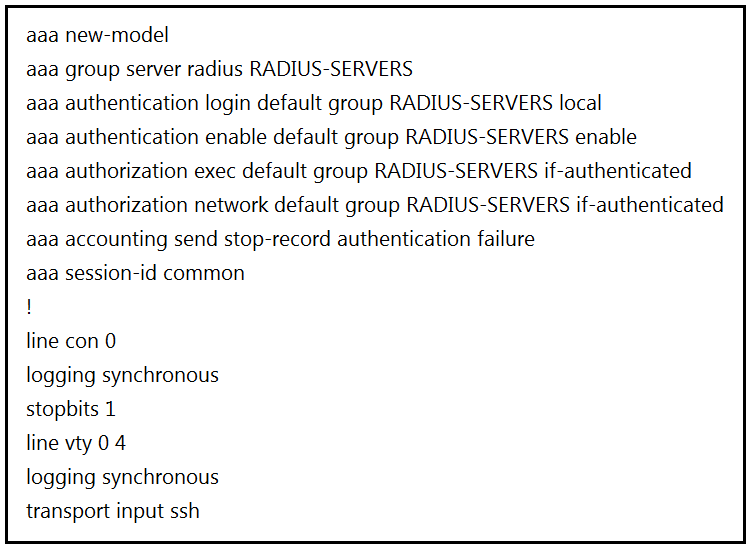
What does IPv6 Source Guard utilize to determine if IPv6 source addresses should be forwarded?
AACLs
BACE
CDHCP
DBinding Table
Refer to the exhibit.
Which action resolves the issue?
AEstablish connectivity between the NTP server and the switch.
BConfigure the local time on the SW1 device.
CConfigure the local time on Cisco DNA Center.
DEstablish connectivity between the NTP server and Cisco DNA Center.
What is a function of BFD?
Afailure detection independent of routing protocols and media types
Bpeer recovery after a Layer 2 adjacency failure
Cpeer recovery after a Layer 3 protocol adjacency failure
Dfailure detection dependent on routing protocols and media types
Refer to the exhibit.
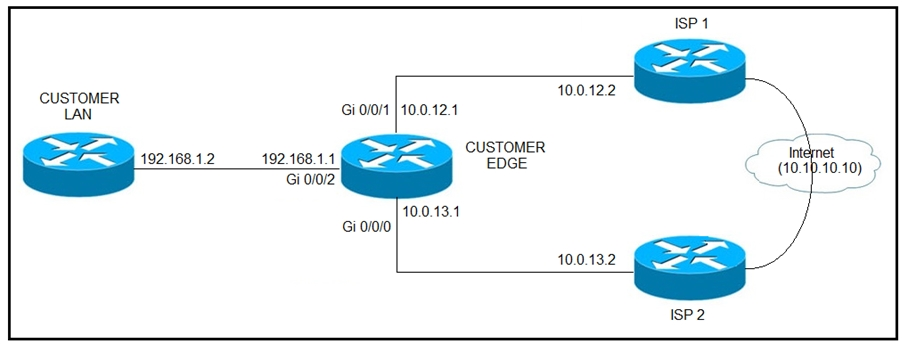
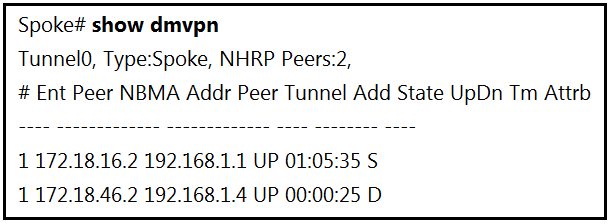
The remote branch locations have a static neighbor relationship configured to R1 only. R1 has successful neighbor relationships with the remote locations of R2 and R3, but the end users cannot communicate with each other.
Which configuration resolves the issue?
A
B
C
D
Refer to the exhibit.
An engineer is troubleshooting a prefix advertisement issue from R3, which is not directly connected to R1. Which configuration resolves the issue?
This is a lab item in which tasks will be performed on virtual devices.
• Refer to the Tasks tab to view the tasks for this lab item.
• Refer to the Topology tab to access the device console(s) and perform the tasks.
• Console access is available for all required devices by clicking the device icon or using the tab(s) above the console window.
• All necessary preconfigurations have been applied.
• Do not change the enable password or hostname for any device.
• Save your configurations to NVRAM before moving to the next item.
• Click Next at the bottom of the screen to submit this lab and move to the next question.
• When Next is clicked, the lab closes and cannot be reopened.
Topology
Tasks
Troubleshoot R-WEST to achieve the desired results:
The locally generated logs should have sequence numbers, date and time.
The SNMP traps related to OSPF and participating interface state changes utilizing RFC1253-MIB OSPFv2 should be sent to SNMP server.
Which attribute eliminates LFAs that belong to protected paths in situations where links in a network are connected through a common fiber?
Ashared risk link group-disjoint
Blinecard-disjoint
Clowest-repair-path-metric
Dinterface-disjoint
Refer to the exhibit. An engineer is trying to block the route to 192.168.2.2 from the routing table by using the configuration that is shown. The route is still present in the routing table as an OSPF route.
Which action blocks the route?
AUse an extended access list instead of a standard access list.
BChange sequence 10 in the route-map command from permit to deny.
CUse a prefix list instead of an access list in the route map.
DAdd this statement to the route map: route-map RM-OSPF-DL deny 20.
Refer to the exhibit. An engineer is troubleshooting BGP on a device but discovers that the clock on the device does not correspond to the time stamp of the log entries.
Which action ensures consistency between the two times?
AConfigure the service timestamps log uptime command in global configuration mode.
BConfigure the logging clock synchronize command in global configuration mode.
CConfigure the service timestamps log datetime localtime command in global configuration mode.
DMake sure that the clock on the device is synchronized with an NTP server.
Which configuration adds an IPv4 interface to an OSPFv3 process in OSPFv3 address family configuration?
Arouter ospfv3 1 address-family ipv4
BRouter(config-router)#ospfv3 1 ipv4 area 0
CRouter(config-if)#ospfv3 1 ipv4 area 0
Drouter ospfv3 1 address-family ipv4 unicast
Refer to the exhibit. What is the result of applying this configuration?
AThe router can form BGP neighborships with any other device.
BThe router cannot form BGP neighborships with any other device.
CThe router cannot form BGP neighborships with any device that is matched by the access list named ג€BGPג€.
DThe router can form BGP neighborships with any device that is matched by the access list named ג€BGPג€.
Refer to the exhibit. Network operations cannot read or write any configuration on the device with this configuration from the operations subnet.
Which two configurations fix the issue? (Choose two.)
AConfigure SNMP rw permission in addition to community ciscotest.
BModify access list 1 and allow operations subnet in the access list.
CModify access list 1 and allow SNMP in the access list.
DConfigure SNMP rw permission in addition to version 1.
EConfigure SNMP rw permission in addition to community ciscotest 1.
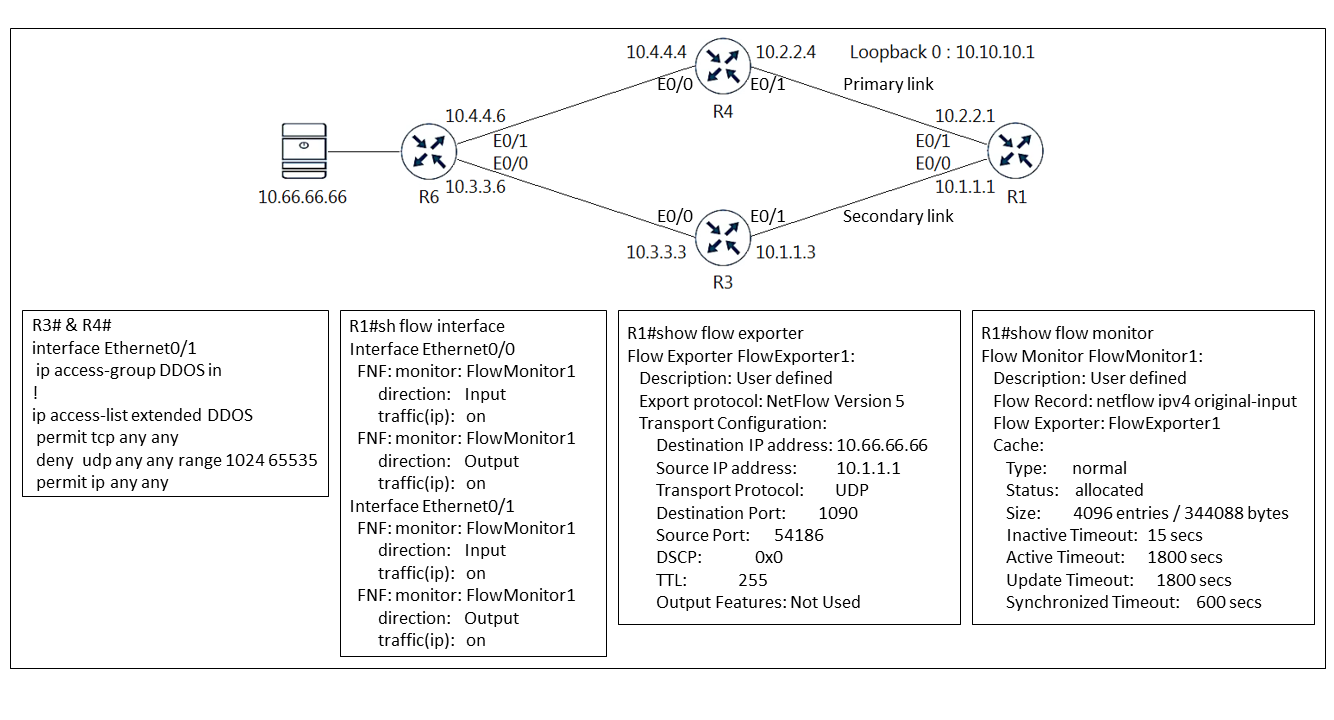
Refer to the exhibit. Why is the remote NetFlow server failing to receive the NetFlow data?
AThe flow exporter is configured but is not used.
BThe flow monitor is applied in the wrong direction.
CThe flow monitor is applied to the wrong interface.
DThe destination of the flow exporter is not reachable.
SIMULATION
Guidelines
This is a lab item in which tasks will be performed on virtual devices.
• Refer to the Tasks tab to view the tasks for this lab item.
• Refer to the Topology tab to access the device console(s) and perform the tasks.
• Console access is available for all required devices by clicking the device icon or using the tab(s) above the console window.
• All necessary preconfigurations have been applied.
• Do not change the enable password or hostname for any device.
• Save your configurations to NVRAM before moving to the next item.
• Click Next at the bottom of the screen to submit this lab and move to the next question.
• When Next is clicked, the lab closes and cannot be reopened.
Topology
Tasks
A company is connected to an ISP and some of the networks between the ISP and the company are not reachable. Troubleshoot and resolve the issues to achieve these goals:
A single /16 is advertised for all infrastructure-connected interfaces that belong to the 10.20.x.x network using BGP network commands from border routers connected to the ISP. Configuration modification is allowed in R4 and R5 to achieve the results. Do not use the BGP aggregate command.
R6 receives the ISP R2 Loopback2 from R4 and receives a summary address for both Loopbacks of ISP R2 from R4 or R5. Use BGP attribute local-preference, add , for example, for R6, use “default+6 = value to be used”. Use the existing prefix lists or route maps with the sequence numbering starting at 10 and added in increments of 10.
R6 receives the ISP R2 Loopback1 from R5 and receives a summary address for both Loopbacks of ISP R2 from R4 or R5 using the same guidelines.
R6 advertises its Loopback1 /24 address through BGP.
Refer to the exhibit. An administrator noticed that after a change was made on R1, the timestamps on the system logs did not match the clock.
What is the reason for this error?
AAn authentication error with the NTP server results in an incorrect timestamp.
BThe keyword localtime is not defined on the timestamp service command.
CThe NTP server is in a different time zone.
DThe system clock is set incorrectly to summer-time hours.
What is a prerequisite for configuring BFD?
AJumbo frame support must be configured on the router that is using BFD.
BAll routers in the path between two BFD endpoints must have BFD enabled.
CCisco Express Forwarding must be enabled on all participating BFD endpoints.
DTo use BFD with BGP, the timers 3 9 command must first be configured in the BGP routing process.