QuestionQ10
VerifiedProtect and DefendYou are assisting a company with adding HPE Aruba Networking ClearPass to its network, which uses HPE Aruba Networking network infrastructure devices.
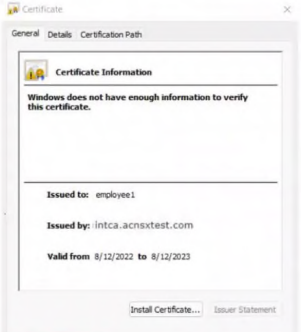
The company already has a Windows domain and Windows CA. The Windows CA issues certificates to domain computers, domain users, and servers such as domain controllers. An example certificate issued by the Windows CA is shown here.
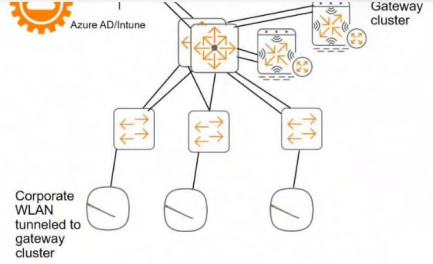
A customer's ClearPass cluster has the following IP addresses:
- Publisher = 10.47.47.5
- Subscriber 1 = 10.47.47.6
- Subscriber 2 = 10.47.47.7
- Virtual IP with Subscriber 1 and Subscriber 2 = 10.47.47.8
The customer's DNS server contains these entries:
- cp.acnsxtest.com = 10.47.47.5
- cps1.acnsxtest.com = 10.47.47.6
- cps2.acnsxtest.com = 10.47.47.7
- radius.acnsxtest.com = 10.47.47.8
- onboard.acnsxtest.com = 10.47.47.8
Refer to the scenario. On CPPM, you are creating the authentication source. You have configured the settings displayed on the tab and have not changed any other settings.
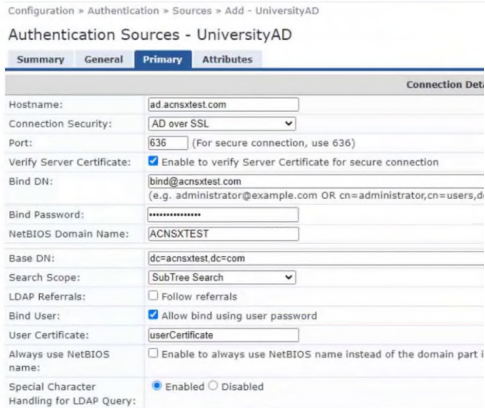
What else must you do to help authentication proceed correctly?
Community Discussion