QuestionQ9
AnalyzeYou are helping a company add HPE Aruba Networking ClearPass to its network, which uses HPE Aruba Networking infrastructure devices.
The company already has a Windows domain and Windows CA. The Windows CA issues certificates to domain computers, domain users, and servers such as domain controllers. An example certificate issued by the Windows CA is shown here.


ClearPass cluster IP addressing and hostnames
A customer's ClearPass cluster uses these IP addresses:
- Publisher = 10.47.47.5
- Subscriber 1 = 10.47.47.6
- Subscriber 2 = 10.47.47.7
- Virtual IP with Subscriber 1 and Subscriber 2 = 10.47.47.8
The customer's DNS server contains these entries:
- cp.acnsxtest.com = 10.47.47.5
- cps1.acnsxtest.com = 10.47.47.6
- cps2.acnsxtest.com = 10.47.47.7
- radius.acnsxtest.com = 10.47.47.8
- onboard.acnsxtest.com = 10.47.47.8
Refer to the scenario.
You have begun creating a CA to meet the customer's requirements for issuing certificates to mobile clients, as shown in the exhibit below.

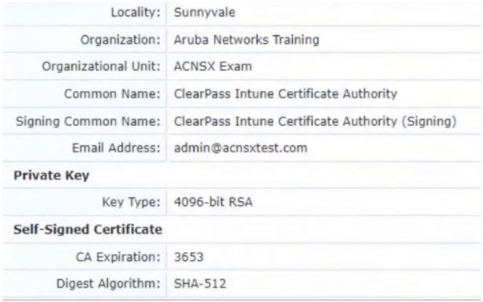
What change will help meet those requirements and the requirements for authenticating clients?
- A Change the EST authentication method to use an external validator.
- B Change the EST Digest Algorithm to SHA-512.
- C Recreate the CA as a registration authority under Microsoft Entra ID (Azure AD).
- D Specify an OCSP responder, setting the hostname to localhost.
Community Discussion