About the Exam

This exam validates advanced UiPath automation development skills for professionals who build or lead production-level automations using UiPath Studio, Robots, and Orchestrator. It is intended for Automation Developers and related roles such as Solution Architects and Automation Architects. The exam covers UiPath product versions 2024.10 and later and includes advanced data manipulation, debugging, advanced UI automation, REFramework, Orchestrator, attended automation, Autopilot, API automation, and resource management. Passing demonstrates deeper expertise in designing and independently developing complex automation solutions.

Exam Topics

  • Development Best Practices25–30%
  • UiPath Studio20–25%
  • UiPath REFramework10–15%
  • Orchestrator and Automation Cloud10–15%
  • UI Automation10–15%
  • Data Manipulation5–10%
  • Integration and API Automation5–10%
  • Testing and Debugging5–10%

How to Use This Practice Exam

  1. Browse — Read each question, select your answer, and reveal the explanation.
  2. Exam Mode — Simulate real exam conditions with a timed session and score report.
  3. Learn Mode — Spaced repetition schedules questions you struggle with for long-term retention.

Download the Full Exam PDF

Get every question and answer in a clean, printable PDF built for offline study. Purchase once, keep permanent access, and re-download the latest version anytime.

Last updated July 7, 2026 at 4:53 AM

Topic filter
Retired questions
Question sort

QuestionQ1

UI Automation

When creating UI automations with Autopilot for developers, what must be prepared in advance to ensure the automation does not fail?

  • A The workflow must be saved and published to Orchestrator first
  • B The automation must be tested manually before using Autopilot
  • C UI elements must be defined in the Object Repository with accurate names and context
  • D All variables must be declared as global variables in the project settings
Explanation

Before using Autopilot for developers to create a UI automation, the UI elements must already be defined in the Object Repository. Accurate names and context enable Autopilot to semantically match the elements; without them, the UI automation may fail.

Learn more

Community Discussion

No comments yet. Be the first to start the discussion!

QuestionQ2

Testing and Debugging

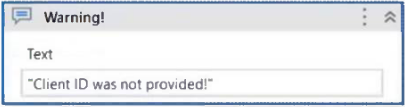
While working on an RPA testing project, you encountered the following activity in one of the workflows included in the project.
Question Image

Which action can you perform in your mocked file to replace the MessageBox functionality with a LogMessage during mock testing?

  • A Synchronize mock.
  • B Create mock workflow.
  • C Surround activity with mock.
  • D Remove mock activity.
Explanation

UiPath Studio allows changes within a mock file only for activities that have been mocked. Surround activity with mock inserts the mock activity around the MessageBox, enabling its behavior to be replaced with a LogMessage for the test.

Learn more

Community Discussion

No comments yet. Be the first to start the discussion!

QuestionQ3

UiPath Studio

How does UiPath Autopilot work when it generates workflows in Studio Web?

  • A It automatically completes the entire workflow without any user intervention or confirmation.
  • B It generates workflows from natural language prompts and predefined prompt examples, providing a visual preview before building the automation.
  • C It generates workflows based on an input Process Design Document, providing a visual preview before building the automation.
  • D It exclusively focuses on creating annotations inside sequences without considering the overall workflow context.
Explanation

UiPath Autopilot can generate a workflow from natural-language prompts or predefined prompt examples. It identifies relevant activities, arranges them logically, and displays a visual preview before the automation is built and confirmed.

Learn more

Community Discussion

No comments yet. Be the first to start the discussion!

QuestionQ4

UiPath REFramework

To allow a developer to use the default REFramework without depending on Orchestrator queues, what essential prerequisite ensures that the project does not communicate with Orchestrator?

  • A Remove the Get Transaction Data state from the Main state machine. Remove the OrchestratorQueueName setting from Config.xlsx & change the variable type.
  • B Eliminate the Get Transaction Data state from the Main state machine. Exclude the Get Transaction Item activity from the project & change the variable type.
  • C Exclude the Get Transaction Item activity from the project. Eliminate the three SetTransactionStatus activities from the SetTransactionStatus workflow & change the variable type.
  • D Omit the OrchestratorQueueName setting from the Config.xlsx file. Exclude the three SetTransactionStatus activities from the SetTransactionStatus workflow & change the variable type.
Explanation

UiPath's ReFramework couples its transaction loop to Orchestrator through two specific integration points: the Get Transaction Item activity inside the Get Transaction Data state, which retrieves the next item from an Orchestrator queue, and the three status-reporting activities in the SetTransactionStatus workflow, which post Success, Business Exception, and Application Exception status back to that queue. To decouple the framework from Orchestrator entirely while preserving its overall control flow, a developer removes the Get Transaction Item activity (substituting a custom data-retrieval mechanism), removes the three SetTransactionStatus activities, and changes the TransactionItem variable's type from QueueItem to a generic object/DataRow type since it is no longer bound to an Orchestrator queue item.

Learn more

Community Discussion

No comments yet. Be the first to start the discussion!

QuestionQ5

UiPath REFramework

Which prerequisite is required before running the InitAllApplications TestCase?

  • A Invoke InitAllSettings XAML file in Given.
  • B Invoke KillAllProcesses XAML file in Given.
  • C Invoke SetTransactionStatus XAML file in Given.
  • D Invoke CloseAllApplications XAML file in Given.
Explanation

InitAllSettings.xaml loads the REFramework configuration and initializes settings required by InitAllApplications.xaml, including values used to open and authenticate to applications. Invoking it in the Given section ensures those dependencies are available before the initialization workflow executes.

Community Discussion

No comments yet. Be the first to start the discussion!
Know a question that should be here? Contribute to this exam
Back home