About the Exam

This exam assesses foundational knowledge of the TOGAF Standard, including core concepts, the ADM, ADM techniques, architecture governance, and architecture content. It is intended for candidates pursuing TOGAF Enterprise Architecture Foundation certification or the enterprise architecture path. Passing demonstrates a solid grounding in TOGAF enterprise architecture fundamentals based on the TOGAF Standard, 10th Edition.

Exam Topics

  • Concepts20%
  • Introduction to the ADM35%
  • Introduction to the ADM Techniques15%
  • Introduction to Applying the ADM10%
  • Introduction to Architecture Governance7%
  • Architecture Content13%

How to Use This Practice Exam

  1. Browse — Read each question, select your answer, and reveal the explanation.
  2. Exam Mode — Simulate real exam conditions with a timed session and score report.
  3. Learn Mode — Spaced repetition schedules questions you struggle with for long-term retention.

Download the Full Exam PDF

Get every question and answer in a clean, printable PDF built for offline study. Purchase once, keep permanent access, and re-download the latest version anytime.

Last updated June 15, 2026 at 11:52 PM

Topic filter
Question status
Question sort
Questions per page

QuestionQ1

VerifiedIntroduction to the ADM

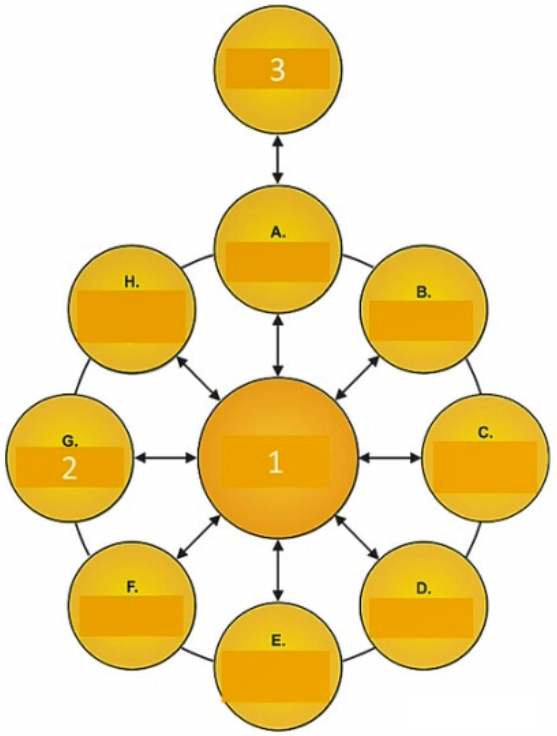
Consider the illustration of an architecture development cycle.
Question Image

Select the correct phase names for labels 1, 2, and 3.

Explanation

In the TOGAF Architecture Development Method, Requirements Management is the central process that operates throughout all ADM phases. Phase G is Implementation Governance, and the Preliminary Phase precedes Phase A, Architecture Vision.

Learn more

Community Discussion

No comments yet. Be the first to start the discussion!

QuestionQ2

VerifiedConcepts

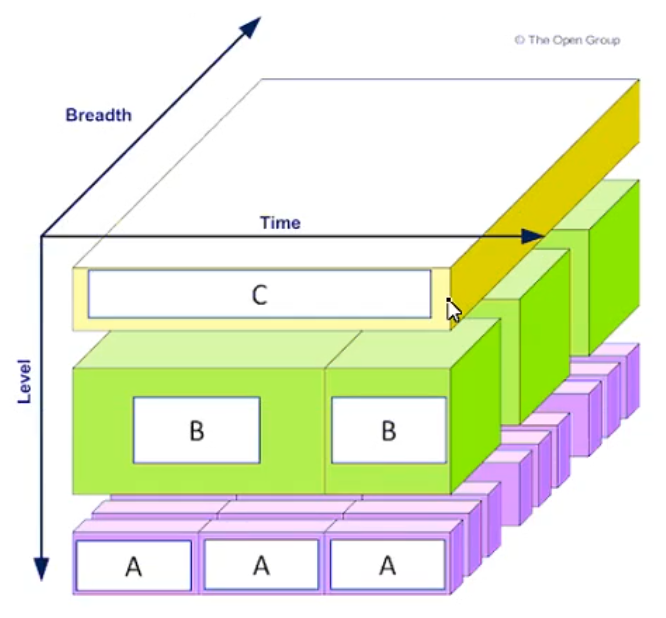
Consider the following classification model for Architecture Landscapes:
Question Image

Consider the Architecture Landscape framework and these level names:

  1. Enterprise Strategic Architecture
  2. Segment Architecture

Match levels A, B, and C with names 1 and 2.

Explanation

TOGAF divides the Architecture Landscape into Strategic, Segment, and Capability Architectures. Strategic Architecture is the enterprise-wide, long-term level, while Segment Architecture is the intermediate level for an area of the enterprise. Thus, C is Enterprise Strategic Architecture and B is Segment Architecture.

Learn more

Community Discussion

No comments yet. Be the first to start the discussion!

QuestionQ3

VerifiedConcepts

Which statement concerning Requirements Management is most correct?

Explanation

Requirements Management is a continuous ADM process that identifies, stores, manages, and feeds architecture requirements into and out of the relevant ADM phases throughout the ADM cycle.

Community Discussion

No comments yet. Be the first to start the discussion!

QuestionQ4

VerifiedIntroduction to Applying the ADM

Consider this statement:

Separate projects can run their own ADM cycles concurrently, with relationships among the various projects.

What does this illustrate?

Explanation

TOGAF ADM iteration can occur across multiple architecture projects: each project may conduct its own ADM cycle at the same time while coordinating dependencies and relationships with other projects.

Community Discussion

No comments yet. Be the first to start the discussion!

QuestionQ5

VerifiedArchitecture Content

What is used to organize architectural information in a structured manner so it can be processed to satisfy stakeholder needs?

Explanation

A Content Metamodel defines architectural content types and the relationships among them, giving architecture information a consistent structure that can be processed and presented to address stakeholder needs.

Community Discussion

No comments yet. Be the first to start the discussion!
Know a question that should be here? Contribute to this exam
Back home