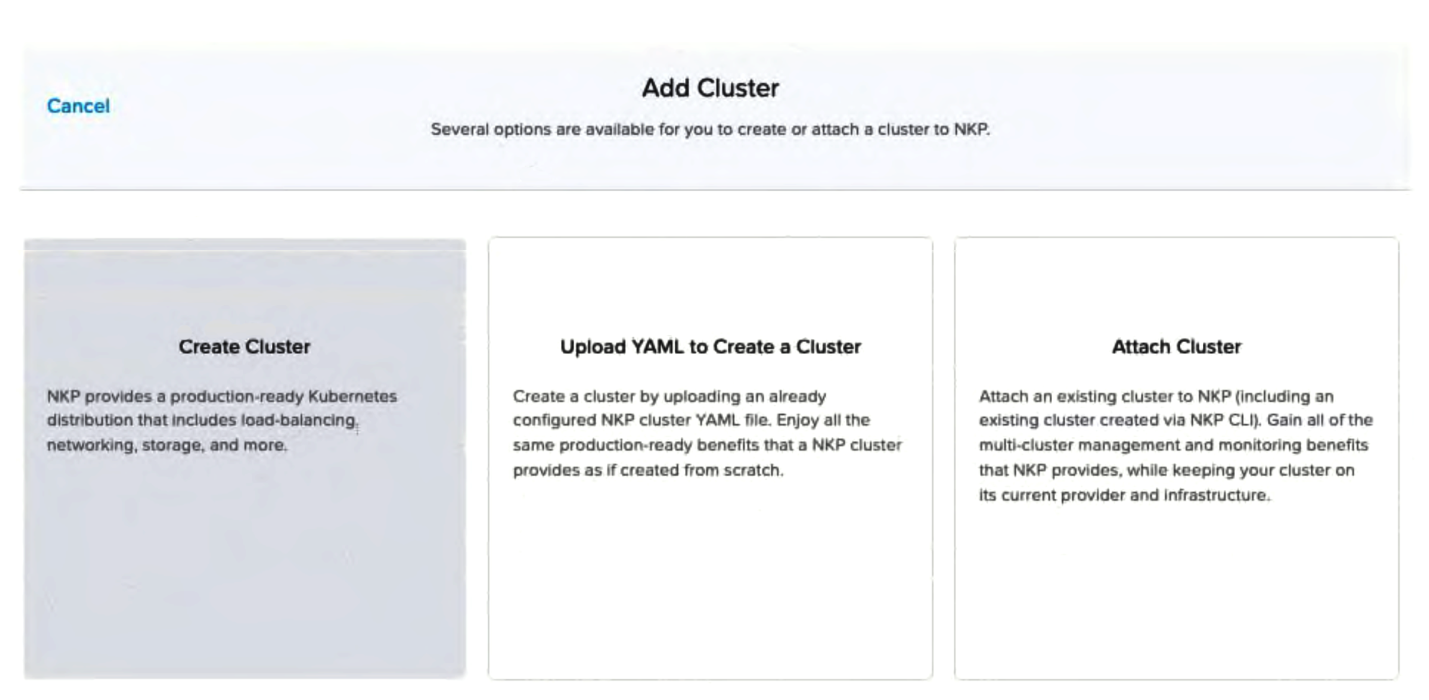
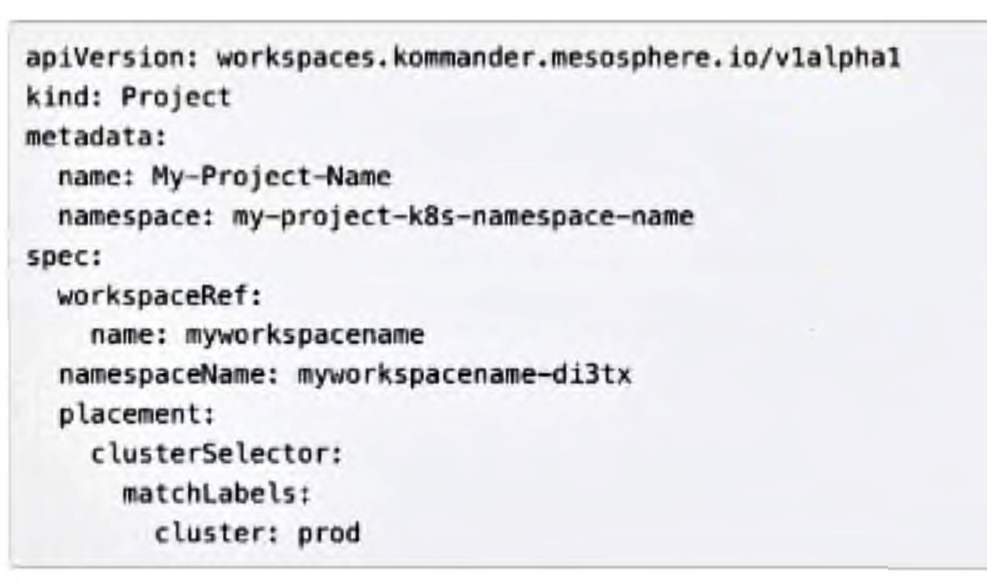
A Platform Engineer wants to deploy a custom OS image for multiple NKP clusters for Nutanix AHV and AWS.
Which two tools come bundled to facilitate creating and placing a custom image into the respective Image repository? (Choose two.)
AKonvoy Image Builder
BAnsible
CNutanix Image Builder
DTerraform
A company was using a test application called temp-shop developed in the temp-ecommerce NKP Starter cluster. Now, the cluster has just been taking up valuable resources that could be used for other projects, so the development team has decided to remove it.
Before proceeding, they verified that they had the correct cluster configuration file temp-ecommerce.conf.
What command should the development team execute to delete the cluster with its nodes and application?
A company has enabled auto-scaling within an NKP cluster.
What is the correct behavior for auto-scaling?
AThe Power-On Status/Mode of a node is changed to meet load conditions.
BMemory is hot-added or hot-removed from a node.
CNodes will be CAPI-created or CAPI-deleted as needed by the cluster.
DCPU is hot-added or hot-removed from a node.
To keep an NKP cluster and applications healthy and drive productivity forward, a Platform Engineer needs to stay informed of all events occurring within the cluster.
What component of kube-prometheus-stack will help the engineer to stay informed of these events in NKP?
Anode-exporter
Balertmanager
Cprometheus-operator
Dservice monitors
A Kubernetes administrator needs to deploy a new Kubernetes cluster into a new workspace. This cluster requires a predictive analytics solution that detects current and future anomalies.
Which option does the administrator need to deploy after the cluster is ready?
ANCM Intelligent Ops
BNutanix Pulse
CNKP Insights
DNKP AI Navigator
An infrastructure team has configured a Backup Storage Location on an existing AWS bucket and created the backup named testbackup.
What command can the team use to view the backup?
Akubectl get backupstoragelocations -n ${testbackup} –o yaml
Bkubectl get backupstoragelocations -n ${WORKSPACE_NAMESPACE} –o yaml
Cvelero backup describe aws-velero-testbackup
Dvelero backup describe testbackup
A Cloud Engineer wishes to attach existing AKS clusters to a newly-deployed NKP management cluster.
What should the engineer consider specific to attaching these type of clusters to NKP?
ACert-manager, which is included in NKP, is deployed by default on AKS clusters. This would need to be removed from the AKS clusters before attaching them.
BAKS nodes do not use containerd as its container runtime. Therefore it should be deployed to each of the nodes in the AKS clusters prior to attaching them.
CA separate service account should be created for them because their kubeconfig files are not usable out-of-box by NKP Kommander.
DAKS does not have the kubelet installed on them. Therefore the KIB-prep process should be performed on each of the nodes in the AKS clusters prior to attaching them.
A Platform Engineer has deployed NKP and wants to utilize its OOB data storage feature.
What should the engineer enable to support backups within the NKP environment?
AMinIO
BVolumes iSCSI
CRook Ceph
DObjects S3
A Platform Engineer is running a Kubernetes cluster version 1.28.1 on AWS that needs to be upgraded to version 1.29.9. This cluster was deployed with Nutanix NKP.
Which two actions should the engineer take to complete this requirement? (Choose two.)
A Platform Engineer has a requirement for backup and recovery and would like to leverage an Out-Of-The-Box solution distributed with NKP.
What is the backup and recovery solution distributed for NKP?
AVelero
BKasten
CNutanix Snapshot
DTar
When deploying NKP using the Nutanix provisioning method (CAPX), what are the supported OS platforms?
ACentOS and Rocky Linux
BCentOS and Ubuntu
CFlatcar, Rocky Linux and Ubuntu
DRocky Linux and Ubuntu
A company has decided to expand NKP to features that require higher product tiers, like fleet-management and additional infrastructure providers. The company has already obtained the necessary licensing.
Which action is required when adding and activating a license from NKP Starter to a higher-tier product?
AEnsure that worker nodes are sized appropriately.
BLog out and log back in as a Global License Administrator.
CRegenerate the ACME-based certificate for NKP.
DContact Nutanix Support.
By default, a full cluster backup is occurring on a daily basis on an NKP-managed cluster. However, the Victory Finance team has requested that their applications be backed up four times a day.
The user group has been assigned to the victory-finance-apps NKP workspace, and the applications have been deployed to the Kubernetes namespace victory-finance.
What is the correct procedure for scheduling the team's application backups?
A
Install the Velero CLI2. Use the Velero CLI to create a backup schedule that includes the following parameters:• Backup name• Kubernetes namespace to backup• Backup frequency (every six hours)• Managed NKP cluster’s kubeconfig
B
Access the NKP UI2. Switch to the victory-finance NKP namespace• Click on the Applications menu panel and select Velero• Edit the Velero application configuration at the cluster level for the specific NKP managed cluster (not all clusters in that NKP workspace):• Set the backup frequency to four times daily
C
Access the NKP UI2. Switch to the victory-finance-apps NKP workspace• Click on the Applications menu panel and select Velero• Edit the Velero application configuration at the cluster level for the specific NKP managed cluster (not all clusters in that NKP workspace):• Set the backup frequency to four times daily
D
Install the Velero CLI2. Use the Velero CLI to create a backup schedule that includes the following parameters:• Backup name• NKP workspace to backup• Backup frequency (every six hours)• Managed NKP cluster’s kubeconfig
VM for this purpose, so the engineer needs to prepare this VM to be used as a bastion host.
Which two actions should the engineer take to complete this task? (Choose two.)
AGet or create SSH Keys.
BEnable NTP Service.
CInstall Docker.
DInstall LDAP Server.
A Platform Engineer is attaching existing Kubernetes clusters to NKP, but a particular Kubernetes Amazon EKS cluster is getting errors with the application deployments. These errors are related to persistent volumes.
What could be the issue and what can the engineer do?
AThere could be a misconfiguration in the configMap. It should be adjusted to the NKP requirements.
BThe storage appliance is having issues. The storage engineer should be contacted to take a look.
CThere is no default StorageClass. Storage classes should be reviewed and only one should be set as default.
DThere is no compatible storage to be attached to the EKS cluster. Ask for a compatible storage.
A Platform Engineer has been tasked with building a custom image for the deployment of NKP management and worker nodes. The engineer needs to ensure that the proper package versions are used when creating these images.
The security team has only authorized version 1.30.5 of Kubernetes and version 1.7.22 of containerd.
Where should the engineer go to verify that this is the version being used when building the custom image?
Aconfig/pulumi/vars/pulumi.kib.config
BThe custom image’s .env file
Cterraform/vars/default/terraform.tfvars
Dansible/group_vars/all/defaults.yaml
A development team decided to employ an efficient monitoring system with Grafana-logging, which was successfully implemented as can be seen in the following output:
AppDeployment "kommander-default-workspace/grafana-logging" created in namespace "kommander-default-workspace".
Which command did the team execute to complete this task?
Akubectl get appdeployment -n konunander-default-workspace
Bkubectl get helmreleases grafana-logging -n kommander-defaultworkspace -w
A developer asked a Platform Engineer to review a deployment in the cluster called iot-1 in the workspace iot-plant-3, but the engineer does not have the kubeconfig file.
Which command is valid for generating the kubeconfig file to review the Kubernetes cluster?
Ankp get configmaps -n iot-plant-3 -c iot-1 > iot-1.conf
Bnkp get kubeconfig -c iot-1 -n iot-plant-3 > iot-1.conf
Ckubectl get secret iot-1 -n kommander > iot-1.conf
Dkubectl get kubeconfig --cluster-name=iot-1 -w iot-plant-3 > iot-1.conf
A Platform Engineer is preparing machine images for NKP through the NIB or KIB process.
What is the purpose of doing this?
ACreating a CAPI compliant image for use as NKP cluster nodes
BTagging the image to be used specifically for NKP
CHardening an OS image with client supplied hardening scripts
DCreating a custom user account for NKP admins to ensure access to NKP nodes
Which procedure should a Platform Engineer follow for setting up user authentication into an NKP cluster?
ADisable native NKP authentication, enable Traefik, and create a connector to the user base's identity provider.
BCreate a Dex connector to the user base's identity provider.
CCreate a MetalLB connector to the user base's identity provider.
DEnable Gatekeeper and create a connector to the user base's identity provider.
Refer to the exhibit.
A DevOps team faces a growing challenge of managing logs from multiple applications in an NKP cluster. With several teams working on different projects, it is essential to implement a Multi-Tenant Logging system that allows each team to access their own logs securely and efficiently.
Initially, two namespaces have been configured for each project, as shown in the exhibit. Then a ConfigMap has also been configured for each tenant, which contains the logging configuration.
Which YAML output corresponds to a retention period of 30 days for tenant-innovation and seven days for tenant-analytics?
A
B
C
D
Refer to the exhibit.
A Platform Engineer is trying to create a new NKP cluster and is getting the error shown in the exhibit.
What is the most likely cause of this error?
AIncorrect formatting in the Ansible playbook
BIncorrect permissions to the NKP binary
CA docker compatible runtime is not running
DAn incorrect Helm chart repo was referenced
A company has 30 Edge devices with lightweight Kubernetes, and developers need to push the application to every edge device.
An NKP administrator has the NKP Ultimate license tier configured and has access to all kubeconfig files for the 30 edge devices.
What is the most efficient way that the administrator can lifecycle manage the application deployments?
AAsk the developers to delete the lightweight Kubernetes and deploy new Kubernetes clusters with NKP.
BCreate a new Workspace and attach the 30 edge devices to this workspace with Attach Cluster.
CCreate a Github configuration, deploy it to the 30 edge devices and configure them to use a github account.
DCreate a script to automate the deployment to every edge device.
A company is developing a new web application consisting of several microservices, including:
Authentication service -
User management service -
Payment processing service -
Each microservice is developed in different teams and requires an isolated environment for testing and development.
To facilitate development and testing, the team decides to create a specific workspace in NKP.
What should the team do to start this new creation?
AFrom the workspace selection dropdown list in the top menu bar, select Create Workspace.
BFrom the Cluster selection, select Add Cluster.
CFrom the workspace selection dropdown list in the top menu bar, select Add Workspace.
DFrom the Administration selection dropdown list in Infrastructure Providers, select Add Infrastructure Provider.