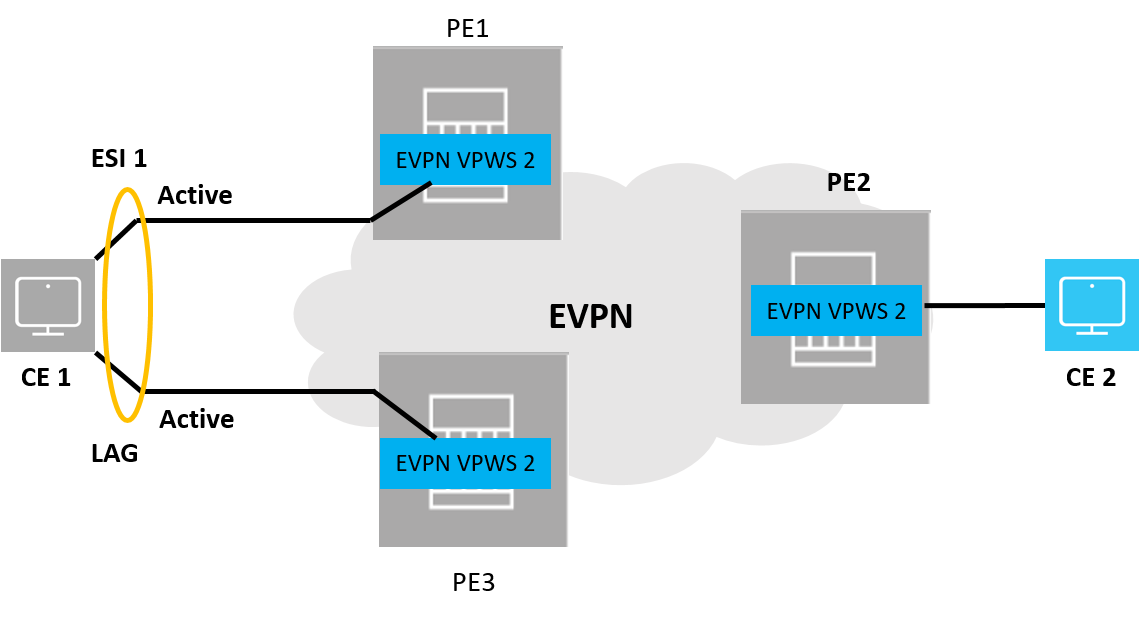
In this topology, CE1 is multihomed in active-active mode (ESI1/LAG) to PE1 and PE3, both configured with EVPN VPWS instance 2 toward PE2, which is single-homed to CE2. Because PE1 and PE3 act as redundant, simultaneously active endpoints for the same VPWS service toward PE2, the local AC tag ID configured on PE1 and the local AC tag ID configured on PE3 must be identical. This ensures that PE2, which advertises and expects a matching remote AC tag ID, receives the same tag value from either PE1 or PE3 regardless of which redundant PE is actively forwarding traffic at any given moment, allowing seamless failover and correct EVPN VPWS pseudowire operation across the active-active multihomed access.
Community Discussion