About the Exam

This advanced ISTQB exam covers risk-based testing, white-box test techniques, static and dynamic analysis, quality characteristics for technical testing, reviews, and test tools and automation. It is aimed at testers who work on the technical side of software quality, including analysis of code, interfaces, non-functional behavior, and automation. ISTQB states that Foundation Level certification is a prerequisite for the Advanced Level Technical Test Analyst exam. Passing demonstrates practical knowledge of technical testing methods across the software development lifecycle.

Exam Topics

  • Requirements Engineering16%
  • Testing in Agile54%
  • Test Automation14%
  • Deployment and Delivery10%

How to Use This Practice Exam

  1. Browse — Read each question, select your answer, and reveal the explanation.
  2. Exam Mode — Simulate real exam conditions with a timed session and score report.
  3. Learn Mode — Spaced repetition schedules questions you struggle with for long-term retention.

Download the Full Exam PDF

Get every question and answer in a clean, printable PDF built for offline study. Purchase once, keep permanent access, and re-download the latest version anytime.

Last updated November 21, 2025 at 1:44 PM

Topic filter
Retired questions
Question sort
Questions per page

QuestionQ1

Test Automation

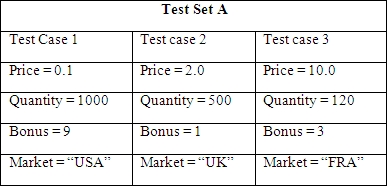
The developers have proposed that test set A is sufficient to test the program shown:
Question Image

When test set A is executed through the program, which statements are exercised?

Explanation

Across the three executions, every reachable statement is exercised except statements 22, 27, 28, and 29. None of the supplied combinations of price, quantity, bonus, and market causes execution to enter the branches containing those statements.

Community Discussion

No comments yet. Be the first to start the discussion!

QuestionQ2

Testing in Agile

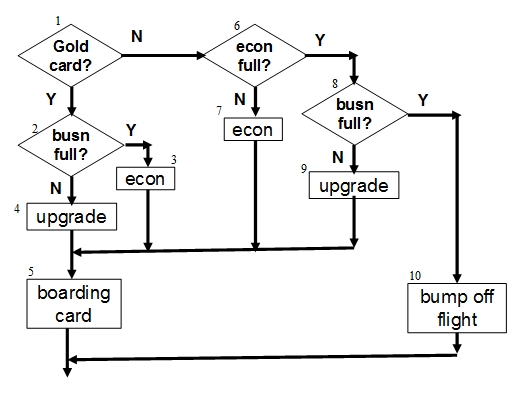
When flying on an economy ticket, you might be upgraded to business class, particularly when you hold a gold card in the airline’s frequent-flier program. If you do not hold a gold card, you might be bumped from the flight when it is full and you check in late. This is illustrated in the following figure. Each box (statement) is numbered.

Three tests have been run:

  • Test 1: A gold-card holder who is upgraded to business class
  • Test 2: A non-gold-card holder who remains in economy
  • Test 3: A person who is bumped from the flight

What is the statement coverage for these three tests?
Question Image

Explanation

The tests collectively execute eight distinct numbered statements: 1, 2, 4, 5, 6, 7, 8, and 10. Of the ten numbered statements, this yields statement coverage of 8/10, or 80%.

Community Discussion

No comments yet. Be the first to start the discussion!

QuestionQ3

Requirements Engineering

The comment frequency for the code fragment is 13%. To which ISO 9126 quality attribute does a good comment-frequency level particularly contribute?

Explanation

A good level of code comments improves understandability and makes software easier to analyze and change, contributing especially to maintainability.

Community Discussion

No comments yet. Be the first to start the discussion!

QuestionQ4

Testing in Agile

A component has been assessed as highly critical. Which of the following structure-based test-design techniques delivers the highest level of coverage?

Explanation

Multiple condition testing covers all possible combinations of the atomic conditions in each decision. Consequently, it subsumes the coverage objectives of less rigorous statement, decision, and condition/decision approaches, providing the highest coverage level listed.

Learn more

Community Discussion

No comments yet. Be the first to start the discussion!

QuestionQ5

Test Automation

What is the number of nesting levels in the code fragment?
Explanation

Nesting level in a code fragment is determined by counting how many control structures (loops, if-statements) are embedded one inside another, starting the count from the outermost structure. A code fragment consisting of one conditional or loop nested inside another outer control structure has two nesting levels — the outer structure being level one and the structure embedded within it being level two — which is the standard way nesting depth is assessed for control-flow-based test design and coverage analysis in the ISTQB syllabus.

Community Discussion

No comments yet. Be the first to start the discussion!
Know a question that should be here? Contribute to this exam
Back home