QuestionQ156
Routing Policy and Manipulation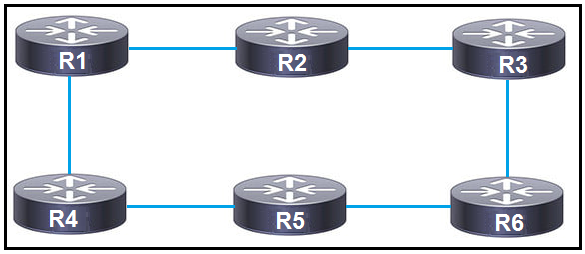
Refer to the exhibit. A service provider runs IS-IS in the core, and every router uses the default IS-IS configuration and is in the same area. Each router maintains a distinct 6-byte system ID, but the attached bits in the NET are identical. After an engineer added router R6 to the network, R3 and R5 began experiencing CPU-processing issues. What action must the engineer take to resolve the issue?
- A Configure all routers to operate as IS-IS Level 1 routers by altering the attached bit to ensure that a default route is injected into the routing tables.
- B Configure routers RS and R3 to operate as Level 1 routers only so that they inject a default routing into the routing tables of the other routers.
- C Configure R6 to operate as a Level 1 router only so that it maintains the Level 1 database for all routers.
- D Configure all routers to operate as IS-IS Level 2 routers so that only a Level 2 database is maintained.
Community Discussion