QuestionQ1
Secure storage, databases, and networkingYou have an Azure virtual network containing 100 virtual machines and an Azure Firewall instance named FW1. All traffic from the virtual machines is routed through FW1.
You need to ensure that FW1 permits access only to the URL updates.contoso.com and blocks all other outbound traffic.
What should you use?
QuestionQ2
Manage identity, access, and governanceYou have a Microsoft Entra tenant with the following configurations:
- User consent for applications is disabled.
- Only administrators can grant permissions to applications.
You register an application named App1 that uses delegated Microsoft Graph permissions.
You need to configure App1 to meet the following requirements:
- Enable user sign-ins without interactive consent prompts.
- Enable App1 to access Microsoft Graph on behalf of the signed-in user.
What should you do?
Community Discussion
QuestionQ3
Secure computeYou have an Azure subscription named Sub1 that contains an Azure Kubernetes Service (AKS) cluster named cluster1 and an Azure container registry named ACR1. Microsoft Defender for Containers is enabled for Sub1, and runtime protection is active on cluster1.
Your company’s developers deploy pods with elevated privileges, and those deployments are created in cluster1.
You need to prevent pods with elevated privileges from being accepted by cluster1.
What should you do?
Community Discussion
QuestionQ4
Manage identity, access, and governanceYou have two management groups, MG1 and MG2, which contain multiple Azure subscriptions. The subscriptions are associated with a Microsoft Entra tenant.
You have a user named User1 and a global administrator named Admin1.
You learn that User1 created an Azure subscription named Sub1 under the MG2 management group and is its only owner.
You need to ensure that Admin1 can remove User1's Owner role on Sub1.
What should you do first?
Community Discussion
QuestionQ5
Manage and monitor security postureHOTSPOT -
Overview -
Contoso, Ltd. is a consulting company with a main office in San Francisco and a branch office in Dallas. Contoso has a hybrid environment that includes on-premises servers connected to Azure, a Microsoft 365 E5 subscription, and an Azure subscription named Sub1.
Existing Environment. Microsoft Entra tenant
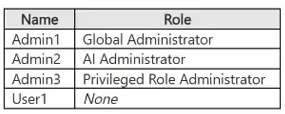
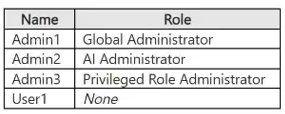
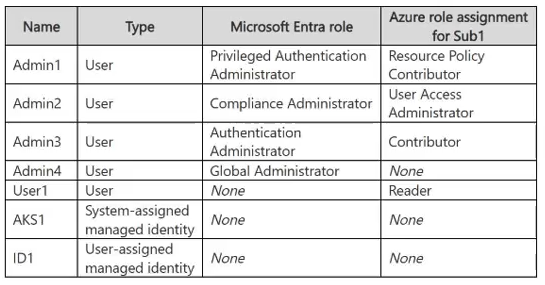
Contoso has a Microsoft Entra tenant named contoso.com that contains the users shown in the following table.
Existing Environment. On-premises environment
The on-premises network contains an Active Directory Domain Services (AD DS) forest that syncs with contoso.com. The forest includes a server named Server1 that runs Windows Server.
Existing Environment. Azure subscription
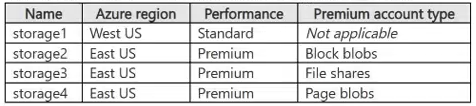
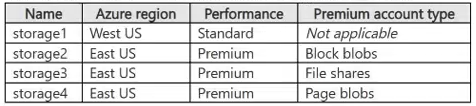
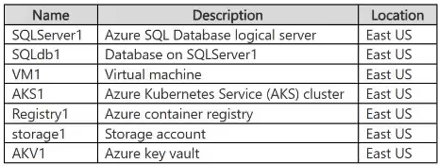
Sub1 contains the storage accounts shown in the following table.
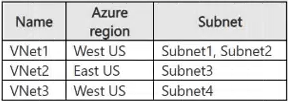
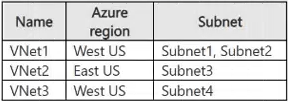
Sub1 contains the virtual networks shown in the following table.
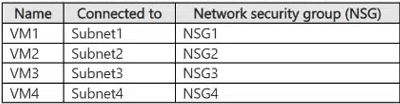
Sub1 contains the virtual machines shown in the following table.
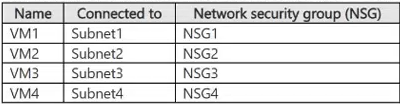
The network interface of VM1 is associated with an application security group named ASG1.
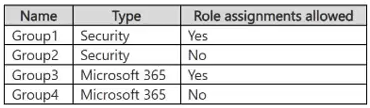
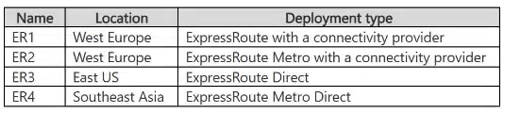
Sub1 contains the resources shown in the following table.

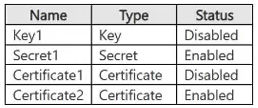
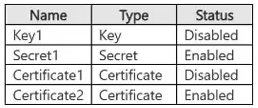
Vault1 stores the objects shown in the following table.
Existing Environment. Privileged Identity Management (PIM) configuration
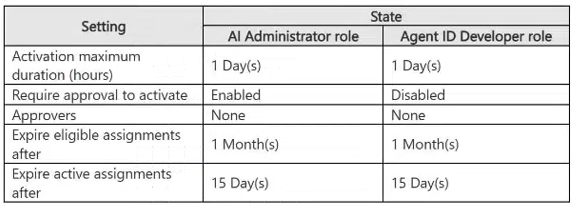
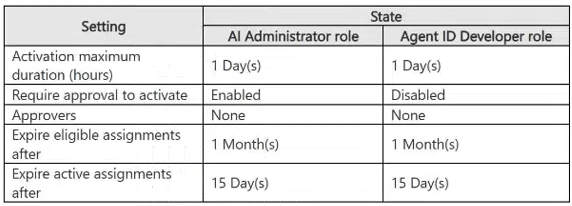
You manage privileged roles by using Privileged Identity Management (PIM). The PIM role settings are configured as shown in the following table.
Existing Environment. Microsoft Sentinel configuration
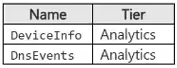
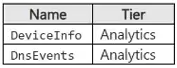
Contoso has a Microsoft Sentinel workspace that contains the following tables.
Requirements. Planned changes -
Contoso plans to implement the following changes:
- Integrate AKS1 with Vault1.
- Enable Microsoft Entra Kerberos authentication for all supported storage.
- Configure auditing for sql1 by using the Azure portal and store audit logs in a centralized location.
Requirements. Technical requirements
Contoso identifies the following technical requirements:
- Protect Server1 by using file integrity monitoring.
- Protect AKS1 by using Microsoft Defender for Cloud.
- Configure Microsoft Sentinel to retain data for the maximum supported duration without changing the tier.
- Store objects used for authentication and encryption in Vault1 and ensure that Vault1 regenerates the objects every 30 days, whenever possible.
You need to configure Server1 to meet the technical requirements. What should you do?

Community Discussion