QuestionQ15
VerifiedPrepare dataHOTSPOT
You have a data warehouse containing the following tables:
- DimCustomer
- DimEmployee
- DimGeography
- FactInternetSales
Every table has a primary key and these relationships:
- CustomerKey = FactInternetSales.CustomerKey
- EmployeeKey = FactInternetSales.EmployeeKey
- Geography = DimCustomer.GeographyKey
You have a T-SQL query named Query1 that contains the following statements.
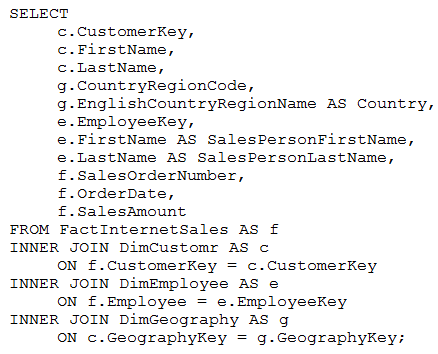
For each statement below, select Yes when the statement is true. Otherwise, select No.
Yes or No
| Statements | Yes | No |
|---|---|---|
| Query1 will return multiple rows for a single customer if the customer has placed more than one online sales order. | ||
| If a customer record in DimCustomer has a GeographyKey value that does NOT exist in DimGeography, the customer’s sales data will still appear in the Query1 results. | ||
| Adding the clause GROUP BY g.EnglishCountryRegionName to Query1 will calculate the total sales amount by country. |
Community Discussion