QuestionQ80
Fundamental Agile Testing Principles, Practices, and ProcessesConsider a Scrum team conducting a quality-risk analysis during the Scrum planning meeting for the first iteration of a Scrum project. The following table shows every user story (backlog item) for the first iteration and the risk items identified for each user story:
See the attachment.
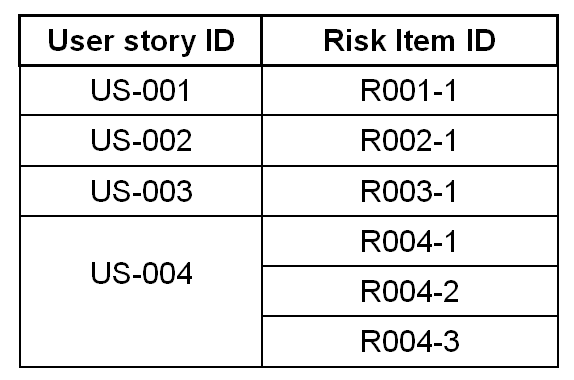
The risk level of each identified risk item will be evaluated from its impact and likelihood. Specifically:
- The risk level of a user story with one risk item equals the risk level of that item.
- The risk level of a user story with multiple risk items equals the average of the risk levels for those items.
Based solely on the information provided, which of the following statements would most likely be true in this scenario?
- A Regardless of the risk level more thorough test techniques should be selected for US-004 since it is the user story with most associated risk items
- B An estimation session subsequent to this risk analysis and aimed at estimating the effort associated to each user story should not consider only the risk level
- C While the identification of the risk items should be performed by the product owner, the assessment of the risk levels should be performed by the whole team
- D Potential issues associated with poorly written user stories should not be raised during risk analysis because they could influence how the risk level is determined
Community Discussion