QuestionQ39
Testing in AgileYou are defining the test approach for an Agile project release that will develop an improved user interface for a golf club's booking system, together with additional features that will enable more flexible bookings across the three courses. The improvements have been driven primarily by customer complaints that the booking system is difficult to follow and restrictive. The release will be split into six two-week sprints.
The stakeholders have completed a risk assessment for the release and determined that, although the system is not mission critical, customer business could be lost; therefore, a High risk level has been agreed. Because there may be a high degree of change to the screen design and functionality across the sprints, a regression-averse strategy is recommended.
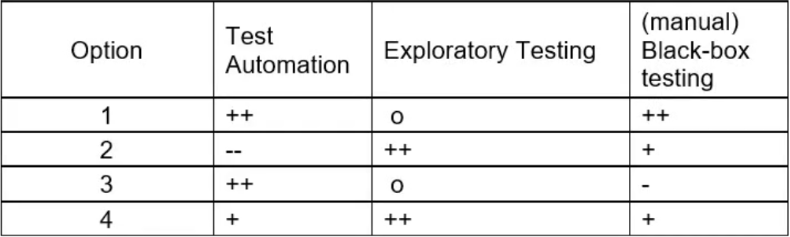
Which option (1 to 4) in the table below represents the BEST test approach for this release, using these symbols?
++(highly recommended)+(recommended)o(neutral/optional)-(not recommended)--(not to be used)
Community Discussion